
@RTSCharlotte Launches Women in Ministry Scholarship

One of the most exciting developments over the last few years at RTS Charlotte is the increasing number of female students in our various degree programs. There is a vibrant community of women on campus led by our Community Life Coordinator, Mallie Taylor.
And these women are some of our best and brightest. Every semester we give awards for the best student papers, and this past year a large percentage of the winners were female students.
And this is good news for the church. Women contribute to and enrich so many different ministries in the church. Examples include: missions, counseling, evangelism, discipleship, women’s ministry, mercy ministry, youth ministry, children’s ministry, … Continue reading...
Is the “New Perspective on Paul” a Product of Our Current Cultural Moment?

Ever since Krister Stendahl’s seminal essay, “The Apostle Paul and the Introspective Conscience of the West,” one of the foundational arguments for the New Perspective(s) on Paul (NPP) has been that the traditional protestant/reformed view of justification is largely due to the cultural influence of “the West” and its emphasis on individualism and subjectivism.
Paul is not really concerned with individual sin, guilt and forgiveness (we are told). Reformed folks are simply reading that issue into the text due to their cultural situation. Indeed, according to Stendahl, the Reformed view of justification is largely due to Luther’s individual struggle with his own conscience.
In place of the reformed view of … Continue reading...
Hello, My Name is God

Did Jesus think he was God?
This may be one of the most common questions people ask about early Christology. And it reflects a long-standing scholarly debate about Jesus’s own divine consciousness. Even if other people thought Jesus was divine, did Jesus himself think so?
A number of years ago, Bart Ehrman jumped into the fray of these debates over early Christology in his book, How Jesus Became God (HarperOne, 2014). And he addressed this question about Jesus’ divine self-awareness.
Not surprisingly, Ehrman argued that Jesus never thought of himself as God. Leaning on his earlier book, Jesus: Apocalyptic Prophet of the New Millennium (Oxford, 2001), he says that Jesus … Continue reading...
Do Christian Parents Have to be Perfect?
I recently did a number of videos for the TGC, and one of them was on lessons I’ve learned as a parent. We have three kids, 18, 15, 12, and have certainly learned a lot of lessons. Here’s one of the main ones:
[iframe width=”1000″ height=”500″ src=”https://www.youtube.com/embed/pIm_gMY6QHE” frameborder=”0″ allow=”accelerometer; autoplay; encrypted-media; gyroscope; picture-in-picture” allowfullscreen></iframe]… Continue reading...
When Is the First Time We See a New Testament Book Used as Scripture?
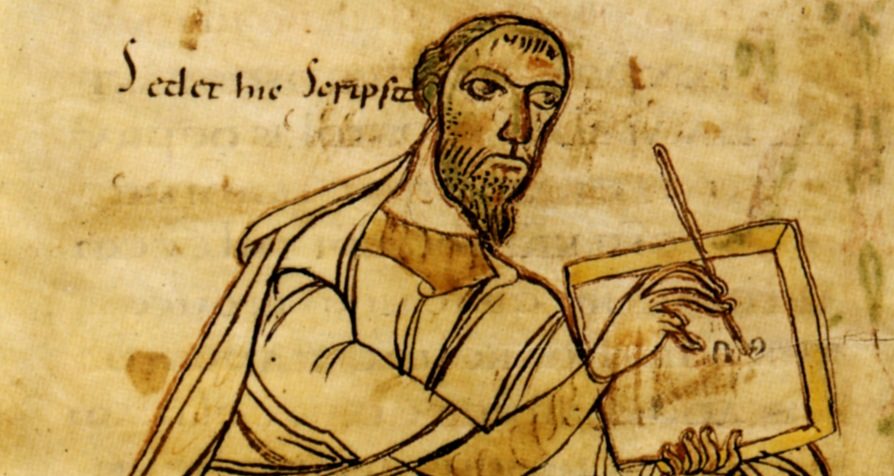
Few issues in the study of the NT canon have generated more discussion (and disagreement) than that of the canon’s date. When were Christian writings first regarded as “Scripture”? When was the first time we can see that happening?
For many modern scholars, the key time is the end of the second century. Only then, largely due to the influence of Irenaeus, were these books first regarded as Scripture.
But, I think there is evidence that NT books were regarded as Scripture much earlier. And some of this evidence is routinely overlooked. A good example is the widely neglected text tucked away in 1 Tim 5:18:
… Continue reading...For the Scripture says,