
Should We Read the Bible Critically or Confessionally? Two New Resources

In the world of biblical scholarship, it has long been clear that there are two very different ways of approaching the biblical text. And these different approaches determine whether scholars find historical (or theological) value in the words of Scripture.
On the one side is the higher-critical approach. Generally speaking, this approach is marked by skepticism towards the claims of the biblical text. The stories contained in the Bible are not taken at face value. While they may contain a “historical core,” they have been embellished and expanded, and perhaps even fabricated. The Bible is a disparate collection of texts that have been cobbled together for various reasons, and not … Continue reading...
Apocryphal Gospels, Conspiracy Theories, and the Mainstream Media

One thing that I have observed over the years is that major media outlets love apocryphal gospels. Whenever the person of Jesus is discussed–usually at Easter and Christmas–there is always a discussion about how the real story of Jesus has been suppressed and can only now be found in these lost gospels.
Sweeping claims are then made about how there was no agreement on much of anything in the first four centuries of the faith and that other stories of Jesus circulated by the thousands. Only after Constantine came along does the church decide which books to accept (and then subsequently denies all other books admission to the club).
When … Continue reading...
7 Tips on How to Survive an Ordination Exam

It’s that time of year. Most seminaries, by now, have had their graduations. Celebrations and congratulations have been passed around, and rightly so. Graduating is a big accomplishment.
And although seminary itself is quite the challenge, something more formidable (at least in terms of stress) awaits most students. The dreaded ordination exam.
This is the time when a candidate stands up in front of the presbytery (perhaps with 50 -75 elders in attendance) and is publicly examined, probed, prodded, and picked at for several hours on a variety of topics ranging from church history to sacraments to eschatology to the famed Book of Church Order.
And from candidate’s perspective, it … Continue reading...
Were Early Christian Scribes Untrained Amateurs?
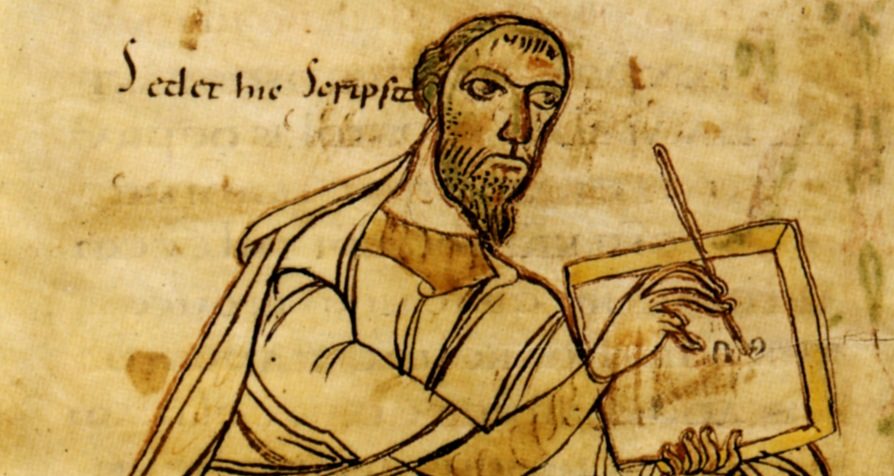
In the ongoing debates about the reliability of early Christian manuscripts, and whether they have been transmitted with fidelity, it is often claimed that early Christian scribes were amateurs, unprofessional, and some probably couldn’t even read.
In Michael Satlow’s book, How the Bible Became Holy (Yale, 2014), this same sort of argument appears. Satlow’s book argues that both the OT and NT canons were late bloomers, and that they bore no real authority until the third or fourth century CE. And part of the evidence for this claim comes from Satlow’s assessment of the NT manuscripts. He states:
… Continue reading...The copies of early Christian manuscripts from around the second century CE
Persistent Myths about the Origins of the New Testament
Are the NT manuscripts corrupted? Have scribes irreparably changed the text? Were Christian scribes competent to copy the text reliably?
How many “other” gospels were there in early Christianity? Were these gospel suppressed by “orthodox” groups? Were these lost gospels as popular as the canonical ones?
Don Carson and I answer these questions for a TGC video:
[iframe width=”1000″ height=”550″ src=”https://www.youtube.com/embed/soRcOA-3pa4″ frameborder=”0″ allow=”accelerometer; autoplay; encrypted-media; gyroscope; picture-in-picture” allowfullscreen></iframe]… Continue reading...