
New Series: What Do Miniature Codices Tell Us About Early Christianity?

As I mentioned in a prior post, my new book with Oxford University Press is now out in both the UK and US: Miniature Codices in Early Christianity. It’s part of Oxford’s long-standing Early Christian Studies series.
I have been working on the subject of miniature codices for more than twenty years now, ever since doing my thesis a while ago under Larry Hurtado on the apocryphal gospel fragment, P.Oxy. 840. I have also written on the miniature codex P.Ant. 12 (0232) which contains 2 John (see here), and a recent overview article on miniature codices in Paratextual Features in Early New Testament Papyri and Manuscripts, eds. … Continue reading...
How Many New Testament Manuscripts Do We Have from the Second Century?

“There is no second-century manuscript evidence.” —Helmut Koester
When it comes to the transmission of the New Testament text, the second century has been long recognized as a critical time period. And it is not hard to see why. If the New Testament books were written (more or less) in the first-century, then the extant manuscripts that get us closest to that time period will inevitably take on a level of significance.
The second century is also significant because of modern scholarly claims that it was precisely this period when the most serious textual corruptions were likely to have occurred, suggesting the earliest phases of transmission were marked by “textual … Continue reading...
What is Meant by the ‘Mark of the Beast’ and ‘666’?

For a number of years now, Queens University of Charlotte has hosted the Tarwater Lectures, an annual event focused on the intersection of faith and science or the social sciences. Named after RTS Charlotte alumna, Ann Tarwater, the lecture is normally delivered by a professor at Reformed Theological Seminary.
Over the years, I have had the privilege of doing several of the lectures, and last year I did the lecture on: “The End of Days: The Book of Revelation in Early Christianity.” Since everyone is always fascinated with the book of Revelation, perhaps it is not surprising that it was one of the best attended lectures in the history of … Continue reading...
Parenting Kids Who Head to the Mission Field

As Christian parents, we pray many things for our children. When they’re younger we tend to pray for their health and safety. As they get older we pray for the education, friendships, and social pressures. And, most of all, we pray that they would know and love Jesus Christ.
In short, as Christian parents we want to entrust our child into God’s hands completely. After all, what is safer than God’s hands?
But, sometimes that’s easier said than done. Sure, God’s hands are the best place for our children—as long as he does what we want with them. As long as they live an ordinary and normal life, in … Continue reading...
Was the Gospel of John Originally Favored by the Heretics?
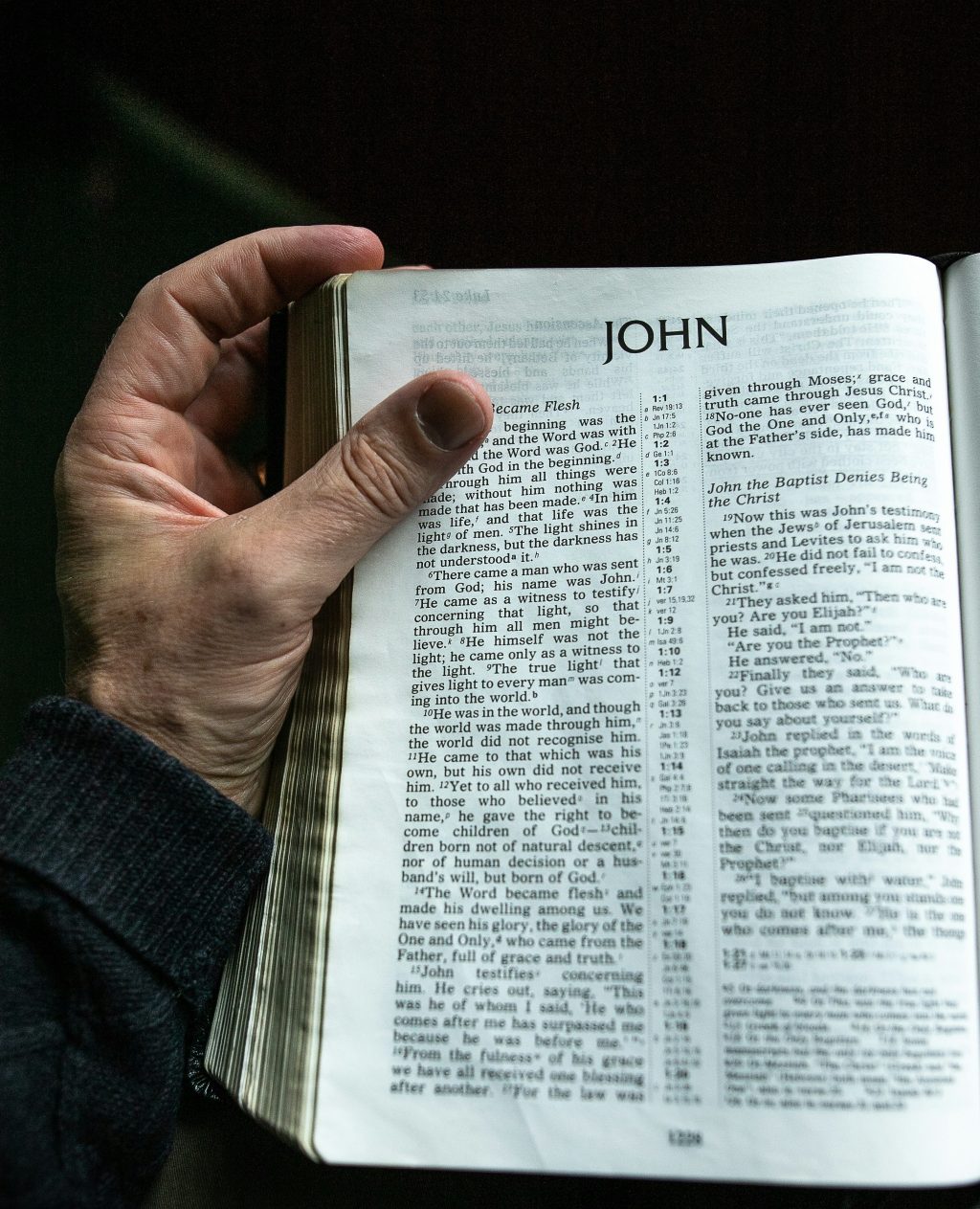
In the modern church, there’s little doubt that the Gospel of John is one of the most—if not the most—beloved Gospels. If forced to pick just one Gospel, many would prefer the Gospel of John. On the rare occasion when a singular Gospel is published as a stand-alone book (or booklet), it is almost always John.
And the reasons for its popularity are not hard to find. Along with an accessible and flowing style, John contains some of the most memorable descriptions and teachings of Jesus: the poetic prologue (1:1-18), the changing of water to wine (2:1-12), the conversation with Nicodemus (3:1-21), the healing of the man born blind (9:1-41), … Continue reading...