
In the modern church, there’s little doubt that the Gospel of John is one of the most—if not the most—beloved Gospels. If forced to pick just one Gospel, many would prefer the Gospel of John. On the rare occasion when a singular Gospel is published as a stand-alone book (or booklet), it is almost always John.
And the reasons for its popularity are not hard to find. Along with an accessible and flowing style, John contains some of the most memorable descriptions and teachings of Jesus: the poetic prologue (1:1-18), the changing of water to wine (2:1-12), the conversation with Nicodemus (3:1-21), the healing of the man born blind (9:1-41), the raising of Lazarus from the dead (11:17-44), the High Priestly Prayer (17:1-26), and more.
Curiously, the situation was very much the same in the early Christian movement. While most scholars would agree that John was the last published among the canonical four—probably sometime in the 90’s—it quickly became one of the most influential and beloved Gospels. If extant manuscripts are a reliable indication of usage, then John was certainly one of the most commonly read (and copied) with nineteen manuscripts from the second and third centuries, more than any other Gospel.
Even so, there’s an important question that still lingers: Who was the Gospel of John popular with? Put differently, who exactly were these early groups that were so favorable to John?
Some modern scholars have offered an answer to that question. They have argued that yes, John was popular, but he was popular among the heretics! Particularly the Gnostics or Valentinians. So popular, the argument goes, that it took the “orthodox” church a long time to overcome their suspicions about the Gospel.
 But is that narrative true? Was John really held at arm’s length by the orthodox church in these earliest centuries?
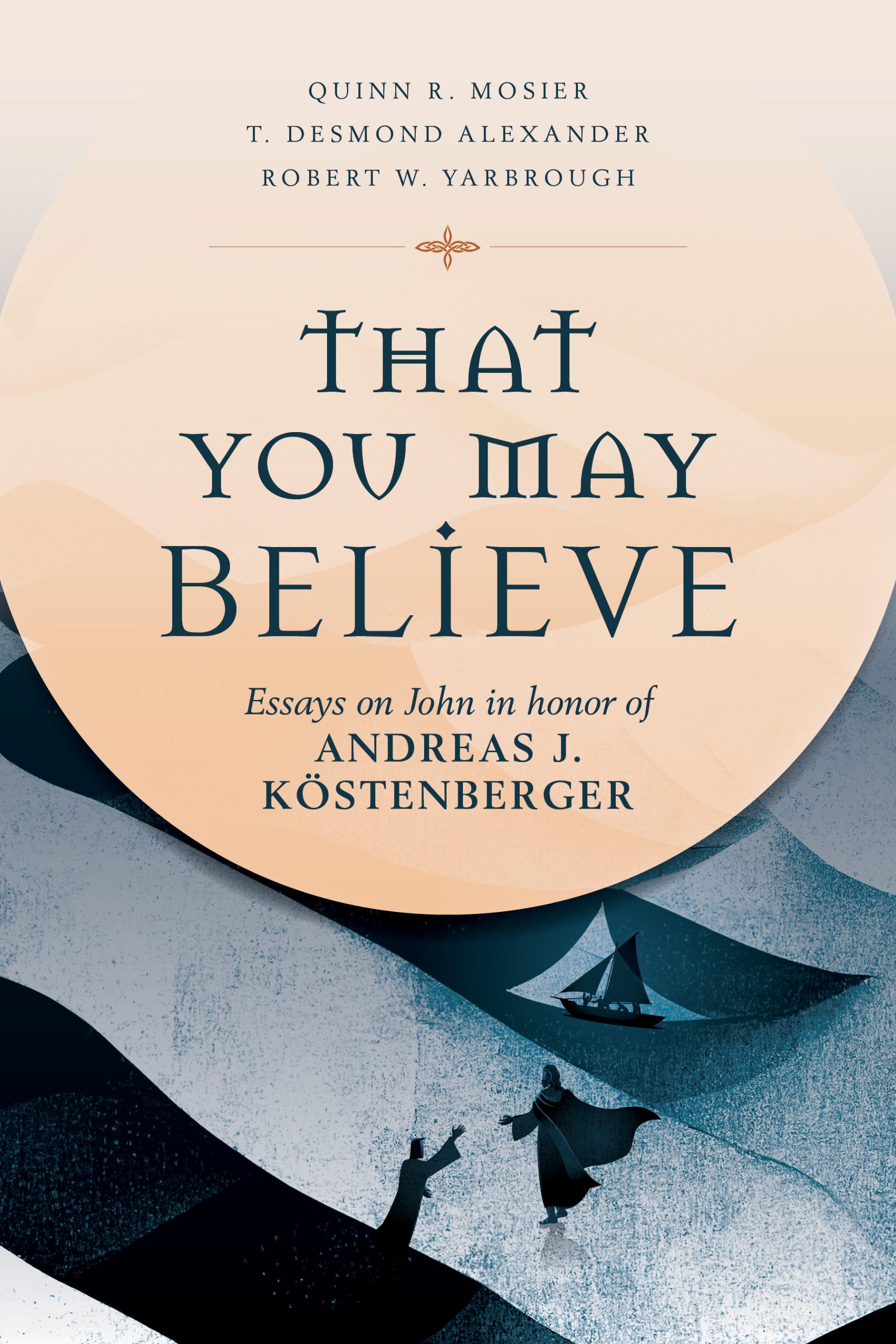
I answer this question in a chapter entitled, “The Reception of John’s Gospel in the Early Church,” which appears in the recently-released volume, That You May Believe: Essays in Honor of Andreas J. Köstenberger (Kregel, 2025), edited by Quinn R. Mosier, T. Desmond Alexander, and Robert W. Yarbrough.
It was an honor for me to contribute to this volume as Andreas and I are longtime friends and also coauthors of The Heresy of Orthodoxy: How Our Contemporary Culture’s Fascination with Diversity Has Reshaped Our Understanding of Early Christianity (Crossway, 2010).
The quick answer to this scholarly paradigm about John (for the full answer, you can read the entire chapter) is that (a) Heretics used the other Gospels too, not just John; (b) The fact that heretics used canonical Gospels did not raise suspicion about them, per se, because heretics were know for using canonical books for their own purposes; and (c) the claim that the “orthodox” were widely suspicious about John just doesn’t hold up upon closer scrutiny.
It should also be said that the standard full-length work that counters “orthodox Johannophobia” is by my Reformed Theological Seminary colleague Chuck Hill, The Johannine Corpus in the Early Church (Oxford, 2004).
This new volume, That You May Believe, also has many other wonderful essays by scholars like Darrell Bock, Paul Anderson, Stan Porter, Tom Schreiner, Eckhard Schnabel, and more. You can purchase it here!