
Apocryphal Gospels, Conspiracy Theories, and the Mainstream Media

One thing that I have observed over the years is that major media outlets love apocryphal gospels. Whenever the person of Jesus is discussed–usually at Easter and Christmas–there is always a discussion about how the real story of Jesus has been suppressed and can only now be found in these lost gospels.
Sweeping claims are then made about how there was no agreement on much of anything in the first four centuries of the faith and that other stories of Jesus circulated by the thousands. Only after Constantine came along does the church decide which books to accept (and then subsequently denies all other books admission to the club).
When … Continue reading...
Hello, My Name is God

Did Jesus think he was God?
This may be one of the most common questions people ask about early Christology. And it reflects a long-standing scholarly debate about Jesus’s own divine consciousness. Even if other people thought Jesus was divine, did Jesus himself think so?
A number of years ago, Bart Ehrman jumped into the fray of these debates over early Christology in his book, How Jesus Became God (HarperOne, 2014). And he addressed this question about Jesus’ divine self-awareness.
Not surprisingly, Ehrman argued that Jesus never thought of himself as God. Leaning on his earlier book, Jesus: Apocalyptic Prophet of the New Millennium (Oxford, 2001), he says that Jesus … Continue reading...
When Is the First Time We See a New Testament Book Used as Scripture?
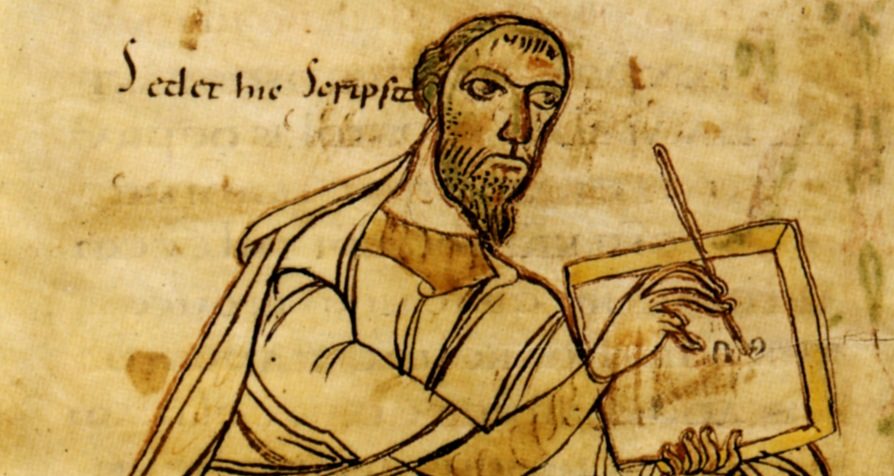
Few issues in the study of the NT canon have generated more discussion (and disagreement) than that of the canon’s date. When were Christian writings first regarded as “Scripture”? When was the first time we can see that happening?
For many modern scholars, the key time is the end of the second century. Only then, largely due to the influence of Irenaeus, were these books first regarded as Scripture.
But, I think there is evidence that NT books were regarded as Scripture much earlier. And some of this evidence is routinely overlooked. A good example is the widely neglected text tucked away in 1 Tim 5:18:
… Continue reading...For the Scripture says,
Book Notice: Can We Trust the Gospels?

I recently received an advanced reader copy of the new book by Peter J. Williams, Can We Trust the Gospels? (Crossway, 2018). Peter is the Principal of Tyndale House, a study center (mainly focused on biblical studies) out of Cambridge, England.
Although similar books have been written in the past (curiously Mark Roberts wrote a 2007 volume for Crossway with the exact same title!), this new volume has some excellent features:
– It does not presuppose prior knowledge of the Gospels, even having a chapter entitled, “What are the Four Gospels?” Thus, it would be great to give to a new Christian or a non-Christian.
– There’s an intriguing … Continue reading...
What is a “Gospel” Anyway? A Few Thoughts on Gospel Genre and Why it Matters

When it comes to reading (and interpreting ) the Gospels, one of the fundamental questions pertains to the kind of document we are reading. What exactly is a “Gospel”? And did the earliest readers of these books know what they were reading?
Such questions may seem pedantic to the average reader, but they matter more than we think. Right interpretation is built on (among other things) correctly assessing the literary genre. We don’t read parables like historical narrative, nor do we read poetry (Psalms) like apocalyptic literature.
An example of confusion over “genre” in our modern world (though in a different medium) pertains to the growing practice of making internet … Continue reading...