
Does the World Notice When Christians Fight with One Another?

In the earliest centuries of the church, the burgeoning Christian movement had its fair share of critics. And their complaints were wide and varied. Christians worshipped a criminal crucified by the Romans. Christians were a threat to the empire because of their refusal to pay homage to the gods. Christian books were filled with errors and contradictions. Jesus was a magician who learned his dark arts in Egypt. And so on.
Of all the early critics (and there were many), Celsus was undoubtedly the most strident. Writing in the latter half of the second century, Celsus was a Greek Philosopher who penned one of the earliest sustained critiques of Christianity … Continue reading...
Was the Gospel of John Originally Favored by the Heretics?
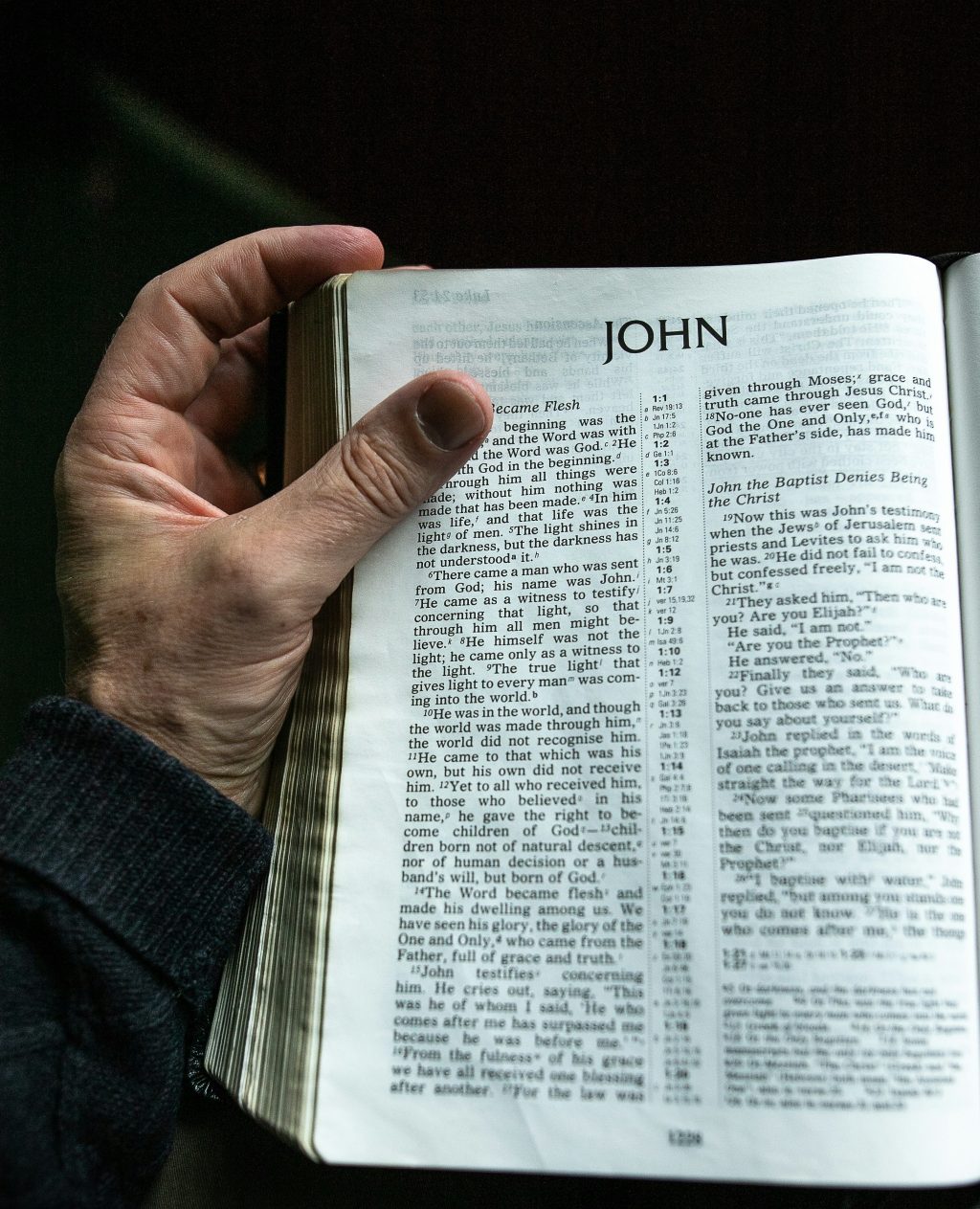
In the modern church, there’s little doubt that the Gospel of John is one of the most—if not the most—beloved Gospels. If forced to pick just one Gospel, many would prefer the Gospel of John. On the rare occasion when a singular Gospel is published as a stand-alone book (or booklet), it is almost always John.
And the reasons for its popularity are not hard to find. Along with an accessible and flowing style, John contains some of the most memorable descriptions and teachings of Jesus: the poetic prologue (1:1-18), the changing of water to wine (2:1-12), the conversation with Nicodemus (3:1-21), the healing of the man born blind (9:1-41), … Continue reading...
Where Are All the Heretical Bishops in the Second Century?

I’ve noticed that Michael Bird has recently posted an article on heresy and orthodoxy in early Christianity. From what I can tell (I can’t see the entire article because it’s behind the paywall), he is pushing back against the popular narrative, originally suggested by Walter Bauer in his 1934 book Orthodoxy and Heresy in Earliest Christianity, which insists that Christianity was wildly diverse in the earliest centuries and that the heretics outnumbered the orthodox. It was not until the 3rd and 4th centuries, according to Bauer, that the orthodox began to turn the tide.
But I think there’s an additional way to test Bauer’s theory. Let’s ask a simple … Continue reading...
Did the Heretics Outnumber the Orthodox in Early Christianity?
One of the most common arguments about early Christianity—made popular by Walter Bauer’s 1934 book Orthodoxy and Heresy in Earliest Christianity—is that the earliest centuries had such enormous doctrinal diversity that the “heretics” were as prevalent, if not even more numerous, than the “orthodox.” It was not until the 4th century, it is argued, that the orthodox began to turn the tide.
But let’s test this theory by asking a simple question: who were the bishops in second-century Christianity? Who were the leaders of all these churches? If heresy was as widespread as orthodoxy, we should expect to find a number of bishops that are openly Marcionite, Ebionite, … Continue reading...
Is the New Testament Really Filled with Contradictory Theologies?

Perhaps no book in the history of the world has received as much scrutiny and criticism as the Bible. For generations, scholars have picked apart every aspect of this book: its history, its transmission, its veracity, its theology, its morality, etc. It has been criticized, ridiculed, mocked and condemned.
Those who are in the academic world—college students, grad students—feel this tension acutely. In fact, this is why I wrote my most recent book, Surviving Religion 101: Letters to a Christian Student on Keeping the Faith in College (Crossway, 2021).
However, in their haste to heap criticism on the Bible, occasionally critics offer arguments that actually prove to be inconsistent with … Continue reading...