
Two New Volumes on Christianity in the Second Century
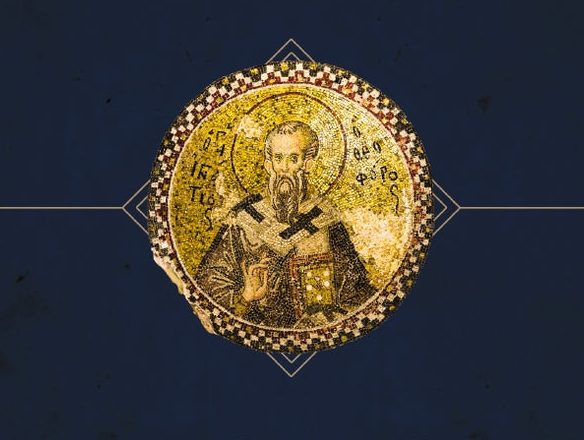
For those regular readers of this blog (or my books), you will know that my research has focused largely on the second century of early Christianity.
It is a forgotten century of sorts. Much attention is paid to the first century (for obvious reasons!), and by the time the third and fourth centuries roll around, the church is more established (which means more sources for scholars to study).
In between sits the “Cinderella Century” (as Larry Hurtado called it), all too easily overlooked. But, in this critical time period the church faced an enormous number of challenges and transitions ones that would shape its identity for years to come.
These … Continue reading...
What Do Miniature Codices Tell Us About Early Christianity? #1

As I mentioned in a prior post, I am starting a new 5-part series exploring what the phenomenon of miniature codices teaches us about the early Christian movement. This series is designed to draw out some practical implications (for a lay audience) from my new book with Oxford University Press, Miniature Codices in Early Christianity.
By way of review (especially if you are just joining the series), miniature codices are basically tiny little books, “pocket Bibles” so to speak. As early as the second century, and especially in the fourth and fifth centuries, Christians began to create these little manuscripts that contained portions of Scripture (and also non-canonical … Continue reading...
When Were Christians First Regarded as Intolerant “Haters”?

In the midst of the high octane culture wars of the last ten years, Christians have been labelled all sorts of things: intolerant, bigoted, arrogant, narrow, dogmatic, just to name a few.
But, one noteworthy word stands out. Christians have been labelled haters. Despite the fact that Christians are to be known by their love (John 13:35), it seems the world often associates us with hate.
A couple observations are worth noting about this phenomenon. First, this sort of accusation against Christians is, at its core, a moral objection. Rather than the standard historical or logical objections often leveled against the faith, this one is fundamentally about ethics. It … Continue reading...
Did the Heretics Outnumber the Orthodox in Early Christianity?

One of the most common arguments about early Christianity—made popular by Walter Bauer’s 1934 book Orthodoxy and Heresy in Earliest Christianity—is that the earliest centuries had such enormous doctrinal diversity that the “heretics” were as prevalent, if not even more numerous, than the “orthodox.” It was not until the 4th century, it is argued, that the orthodox began to turn the tide.
But let’s test this theory by asking a simple question: who were the bishops in second-century Christianity? Who were the leaders of all these churches? If heresy was as widespread as orthodoxy, we should expect to find a number of bishops that are openly Marcionite, Ebionite, … Continue reading...
Was Early Christianity Hostile to Women?

Since we live in a culture that is obsessed with gender identity and gender issues, it is not surprising to find Christianity on the receiving end of serious criticisms regarding its view of women.
Christianity–particularly if it embraces a complementarian theology–is viewed by many in our culture as oppressive and harmful to women. It does not provide, we are told, a friendly and welcoming environment where women can grow and thrive.
But, this is not just a problem for modern Christianity. The oppression of women, it is argued, was especially a problem in early Christianity. After all, in the first few centuries of the church, critics insist that the Christian … Continue reading...