
For those regular readers of this blog (or my books), you will know that my research has focused largely on the second century of early Christianity.
It is a forgotten century of sorts. Much attention is paid to the first century (for obvious reasons!), and by the time the third and fourth centuries roll around, the church is more established (which means more sources for scholars to study).
In between sits the “Cinderella Century” (as Larry Hurtado called it), all too easily overlooked. But, in this critical time period the church faced an enormous number of challenges and transitions ones that would shape its identity for years to come.
These transitions includes issues of demographics (what kind of people became Christians?), politics (how’d Christians interact with the Roman government and how were they perceived?), ecclesiology (who ran the churches and how’d they relate to each other?), theology (were Christians unified in their beliefs and how did they handle “heresy”?), and Scripture (when did Christians collect their own books as canon?).
I addressed many of these questions in my volume Christianity at the Crossroads: How the Second Century Shaped the Future of the Church (IVP Academic, 2018).
Since that time, I’ve been pleased to see more and more attention being paid to the second century. On that note, I want to highlight two new volumes that were just released this past fall at SBL. Each focus on the second century, but in slightly different ways.
The Apostolic Fathers
Zondervan Academic just released Vol. 4 of the Ancient Literature for New Testament Studies (ALNTS) series: The Apostolic Fathers, edited by Paul Foster. This impressive volume weighs in at over 572 pages that span 20 different chapters exploring both the text and the theology of the Apostolic Fathers.
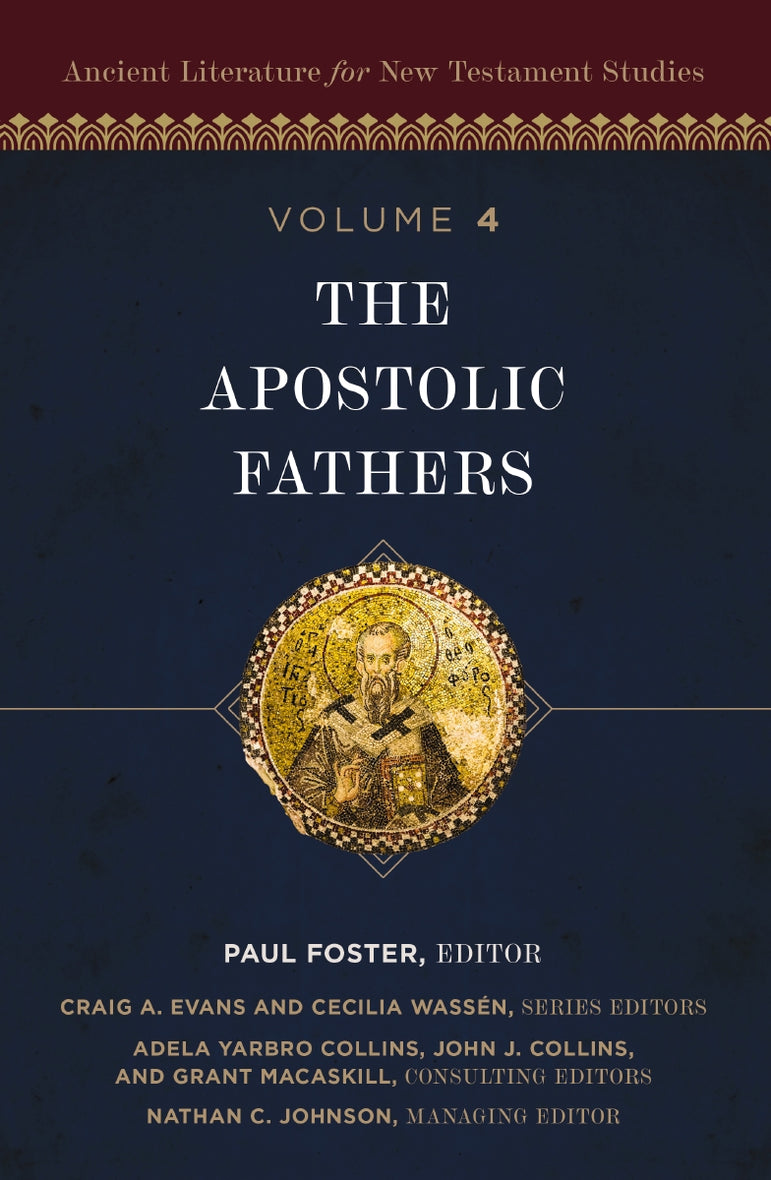 The collection of scholars is impressive, including Joseph Verheyden, Clare Rothschild, James Kelhoffer, Andrew Gregory, Scott Harrower, Michael Bird, David Lincicum, Carolyn Osiek, Teresa Morgan, Paul Hartog, and more.
My chapter was entitled, “The Writings of the New Testament in the Apostolic Fathers,” where I pick up the age-old question of whether the Apostolic Fathers knew any of the New Testament writings, and (if so) how those texts might have functioned within the early Christian movement.
This subject is widely debated and quite complex, but at the end I try to sum up my conclusions as concisely as possible: “It seems that oral tradition was not the only influence on the Apostolic Fathers. Written documents that would be part of a future New Testament were also being used, some which were even regarded as Scripture” (487).
A Handbook to Second-Century Christianity
At nearly the same time, Baylor University Press released A Handbook to Second-Century Christianity, edited by Michael F. Bird and Scott Harrower. Clocking in at more than 678 pages, this volume includes 22 chapters on a wide-range of issues including the identity of early Christians, emerging theological diversity, second-century writings (including apocryphal texts), and early Christian textual culture.
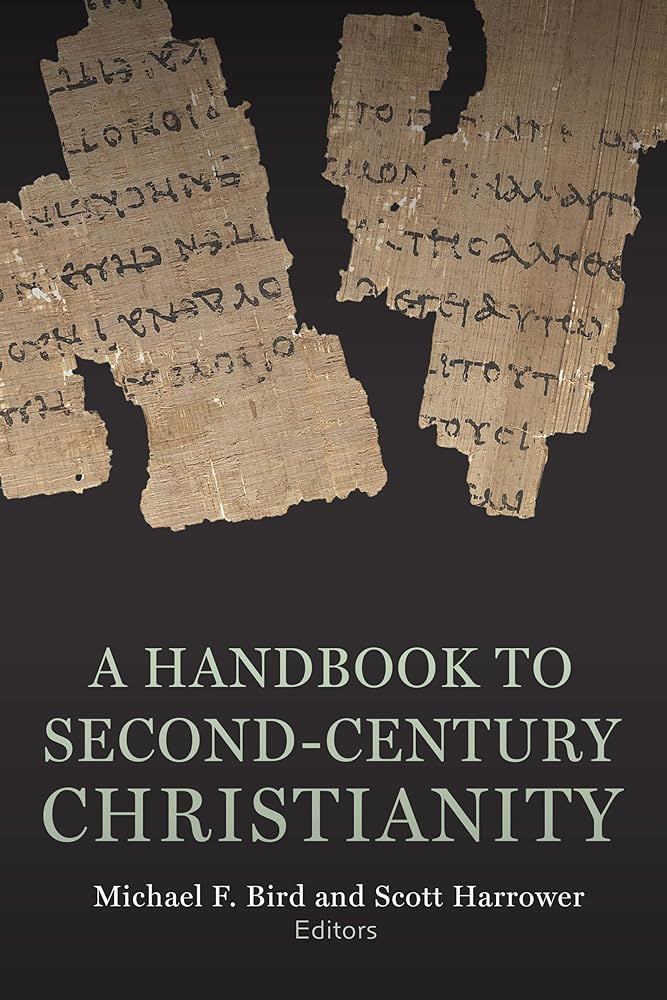 Similar to the volume above, this is an impressive group of scholars, including Jeff Bingham, Edwina Murphy, Janelle Peters, Christine Jacobi, Markus Bockmuehl, Jacob Rodriguez, Jörg Frey, Tobias Nicklas, Lynn Cohick, Samuel Cho, Eckhard Schnabel, Paul Foster, Stephen Carlson, Tomas Bokedal, and more.
My article in the volume was entitled, “New Testament Manuscripts (Possibly) from the Second Century,” where I take up yet another highly-debated question, namely how many of our NT manuscripts go back to the second century.
Of course, this is a particularly sticky issue given all the recent chatter over dating methodology, and how reliable (or unreliable) it has proven to be. Thus, the term “possibly” figures heavily into my chapter.
In the end, I survey twelve NT manuscripts that might be second century, but I think a number of those are likely third century (or even later).
Let me offer my congratulations to the editors of both volumes, Paul Foster and Michael Bird and Scott Harrower, and also to all the contributors. These volumes are sure to make a significant contribution to our understanding of the fascinating “Cinderella” time period we call the second century.