
Were Early Christian Scribes Untrained Amateurs?
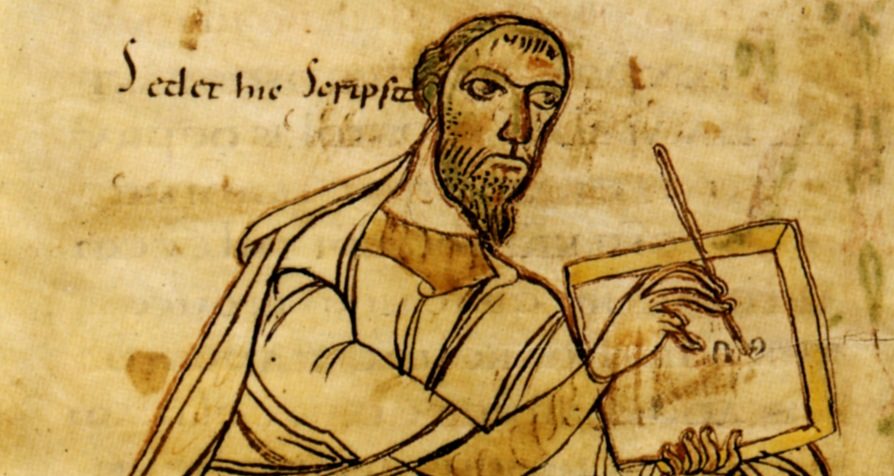
In the ongoing debates about the reliability of early Christian manuscripts, and whether they have been transmitted with fidelity, it is often claimed that early Christian scribes were amateurs, unprofessional, and some probably couldn’t even read.
In Michael Satlow’s book, How the Bible Became Holy (Yale, 2014), this same sort of argument appears. Satlow’s book argues that both the OT and NT canons were late bloomers, and that they bore no real authority until the third or fourth century CE. And part of the evidence for this claim comes from Satlow’s assessment of the NT manuscripts. He states:
… Continue reading...The copies of early Christian manuscripts from around the second century CE
Persistent Myths about the Origins of the New Testament
Are the NT manuscripts corrupted? Have scribes irreparably changed the text? Were Christian scribes competent to copy the text reliably?
How many “other” gospels were there in early Christianity? Were these gospel suppressed by “orthodox” groups? Were these lost gospels as popular as the canonical ones?
Don Carson and I answer these questions for a TGC video:
[iframe width=”1000″ height=”550″ src=”https://www.youtube.com/embed/soRcOA-3pa4″ frameborder=”0″ allow=”accelerometer; autoplay; encrypted-media; gyroscope; picture-in-picture” allowfullscreen></iframe]… Continue reading...
Off to Denver for the Annual Meeting of the Evangelical Theological Society

Today, I am heading to Denver for the 70th meeting of the Evangelical Theological Society. ETS is one of the world’s largest gatherings of evangelical scholars. This year’s theme is “the Holy Spirit.”
As some of you may know, this year I am serving as the president-elect of the society (next year I am president) and thus I had the privilege of inviting all the plenary speakers. And we have a great lineup ahead.
Given the potential breadth of this year’s theme, the meeting has been designed to explore the Holy Spirit from multiple angles. Most naturally, of course, this theme will be studied from a theological perspective. But, … Continue reading...
Is There a First-Century Fragment of Mark’s Gospel? Apparently Not

Over the last several years, there has been much discussion in the blogosphere (and beyond) about the possibility that a fragment of Mark’s Gospel had been discovered which could reliably be dated to the first century.
Most notably, the fragment was alluded to by Dan Wallace in his 2012 debate with Bart Ehrman (though no details were offered due to Wallace having signed a non-disclosure agreement). But it has also been mentioned by Scott Carroll, Craig Evans, and Josh McDowell. There was an even article about the fragment in Forbes.
Needless to say, many scholars were skeptical about the possibility of a first-century Mark for a … Continue reading...
Confused by All the Attacks on the Bible? Here Are Three Categories to Help You

When it comes to the truth of the Bible, our world has found plenty of reasons to reject it. We are bombarded with a dizzying variety of objections. So much so, that the average believer is quickly overwhelmed.
It’s a bit like being in a fight with multiple opponents at the same time. You might have a chance in a one-on-one contest, but it is disorientating when punches are coming from all sides. You can’t block them all.
One helpful way to address this problem is to learn how to separate these varied objections into distinct categories. This simple step allows us to organize our thinking. This helps us get … Continue reading...