
What Is So Important about the Second Century? A Preview of My New Book

Due out this Summer (hopefully by July) is my latest book: Christianity at the Crossroads: How the Second Century Shaped the Future of the Church (London: SPCK/IVP Academic, 2017).
For some, the rationale for a book on the second century is quite obvious. But others may wonder, “What is so important about the second century anyway?”
So, just a few quick thoughts on why I wrote this book:… Continue reading...
Was Early Christianity Hostile to Women?
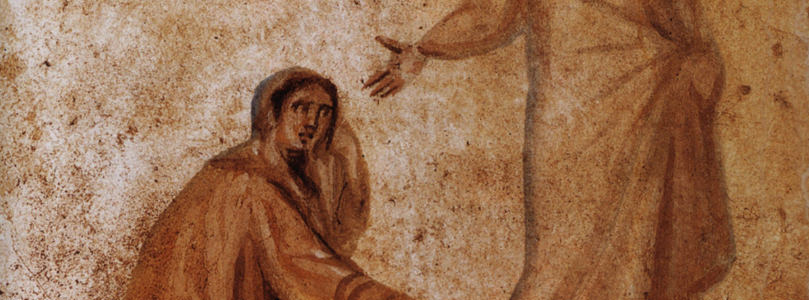
Since we live in a culture that is obsessed with gender identity and gender issues, it is not surprising to find Christianity on the receiving end of serious criticisms regarding its view of women.
Christianity–particularly if it embraces a complementarian theology–is viewed by many in our culture as oppressive and harmful to women. It does not provide, we are told, a friendly and welcoming environment where women can grow and thrive.
But, this is not just a problem for modern Christianity. The oppression of women, it is argued, was especially a problem in early Christianity. After all, in the first few centuries of the church, critics insist that the Christian … Continue reading...
Where Are All the Heretical Bishops in the Second Century?

A number of my recent posts (e.g., see here) have been dealing with Walter Bauer’s 1934 book Orthodoxy and Heresy in Earliest Christianity which insists that Christianity was wildly diverse in the earliest centuries and that the heretics outnumbered the orthodox. It was not until the 3rd and 4th centuries, it is argued, that the orthodox began to turn the tide.
But let’s test this theory by asking a simple question: who were the bishops in second-century Christianity? If heresy was as widespread as orthodoxy, we should expect to find a number of bishops that are openly Marcionite, Ebionite, Gnostic, and beyond.
The problem for Bauer’s thesis is that … Continue reading...
One of the Clearest (and Earliest) Summaries of Early Christian Beliefs

Since I am currently writing a book on Christianity in the second century, my research has been focused on some of our earliest patristic texts. These texts are a treasure trove of fascinating statements and declarations that provide tremendous insight on what early Christians really believed.
Some of my prior posts on this theme include discussions of the persecution of Christians, early Christian sexual ethics, the divinity of Jesus, and the doctrine of substitutionary atonement.
Most recently, I came across an amazing paragraph in one of our earliest Christian apologies. Aristides, a converted Athenian philosopher, wrote an apology to emperor Hadrian around 125 A.D. As such, … Continue reading...