
It’s Here! My New @Ligonier DVD Series on the Origins of the NT Canon
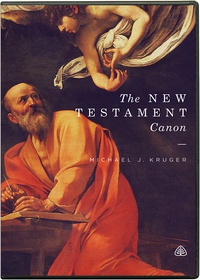
One of the most common questions I am asked is whether I have introductory, lay-level material on the origins of the NT canon that people can use in their churches. For small group Bible studies or Sunday School classes, most people simply won’t read Canon Revisited or any of my other books.
So, I am pleased to say that Ligonier is about to release a new DVD series where I give six introductory lectures on the origins and authority of the NT canon. My hope is that this will meet a need for churches looking to do something on canon but not knowing where to turn.
You can order the … Continue reading...
What about the ‘Lost’ Books of the Bible?

In modern studies of the NT canon, there is a lot of discussion (maybe even obsession!) with so-called ‘lost’ books of the Bible. So, we have recent book titles like Lost Scriptures, Forgotten Scriptures, and The Lost Bible.
In fact, scholar Philip Jenkins even wrote a whole book documenting (and critiquing) the academic community’s fascination with this theme: Hidden Gospels: How the Search for Jesus Lost Its Way.
So what do we with these other books of the New Testament? A few quick thoughts.
First, most of these books weren’t really ‘lost.’ The early church fathers were very much aware of these other books. Indeed, they … Continue reading...
Did the Church Create the Bible?

The perennial question in the debate over sola Scriptura is whether the church is over the Bible or the Bible is over the church.
The latter position is (generally speaking) a Protestant one—the Scriptures, and the Scriptures alone, are the only infallible rule and therefore the supreme authority over the church.
The former position (generally speaking) is a Roman Catholic one—the church decided the canon and also, through the pope, decides how these books are to be interpreted. In this way, the authority of the Bible rests on the (prior and more foundational) authority of the church.
Of course, Catholics would not word it quite this way. The Roman church … Continue reading...
Off to Denver for the Annual Meeting of the Evangelical Theological Society

Today, I am heading to Denver for the 70th meeting of the Evangelical Theological Society. ETS is one of the world’s largest gatherings of evangelical scholars. This year’s theme is “the Holy Spirit.”
As some of you may know, this year I am serving as the president-elect of the society (next year I am president) and thus I had the privilege of inviting all the plenary speakers. And we have a great lineup ahead.
Given the potential breadth of this year’s theme, the meeting has been designed to explore the Holy Spirit from multiple angles. Most naturally, of course, this theme will be studied from a theological perspective. But, … Continue reading...
Why I Don’t Prefer the Phrase “Criteria of Canonicity”

If a person asks how we know which books belong in the NT canon (and which do not), they will often hear that the answer lies with the “criteria of canonicity.”
All we have to do, we are told, is simply look for books that meet these “criteria” and then we can know which books are in or out. What are these criteria? Typically things like apostolicity, orthodoxy, usage, age, etc.
Now, let me say there are a number of helpful things here. In particular, I agree that apostolicity is a key aspect of canon. However, I don’t prefer the concept of “criteria of canonicity” for a number of reasons:… Continue reading...