
Did Paul Himself Create the Very First New Testament Canon?

Let’s just admit it. We rarely pay attention to the final greetings that Paul offers at the end of his letters. Such personal statements are, well, too personal—they just don’t seem meant for us. However, our unfortunate neglect of these passages can leave a variety of treasures undiscovered. One such passage may even bring unexpected illumination about the origins of the New Testament canon.
In 2 Tim 4:13 Paul says to Timothy, “When you come, bring the cloak that I left with Carpus at Troas, also the books, and above all the parchments.” Paul makes a curious distinction here between “the books” (ta biblia) and “the parchments” (tas membranas), suggesting … Continue reading...
10 Misconceptions About the NT Canon: #4: “Books Were Not Regarded as Scripture Until Around 200 AD”

Note: This is the fourth installment of a blog series announced here.
The date of the NT canon is one of the most controversial questions in biblical studies today. As a prior post indicated, part of the answer to the question of date is dependent upon one’s definition of “canon.” But, even if we take the functional definition of canon—books are canonical when they are being used as Scripture—there is still debate about how early this took place.
In recent years, however, somewhat of a quasi-consensus has been building that the canon was first regarded as Scripture at the end of the second century (c.200). McDonald is representative of … Continue reading...
Can the New Testament Canon be Defended? My Interview with Derek Thomas

Reformation 21, the website of the Alliance of Confessing Evangelicals, just posted my interview with Derek Thomas on my new book, Canon Revisited. I appreciate Derek’s invitation to do this interview–it was an interesting discussion on a number of important topics related to canon.
Here is an excerpt:
… Continue reading...[DT] What are the most crucial issues relating to a conservative/reformed defense of the canon today?
[MK] I think one of the critical weaknesses in modern canonical studies is that Christians often have no theology of canon. We have a lot of historical facts–anyone who has read the fine works of Metzger and Bruce will have plenty of patristic
Were the Earliest Christians Only Concerned About Oral Tradition?

I’ve spent the last week or so diving deeply (again) into the writings of the Apostolic Fathers. The Apostolic Fathers are an informal collection of early Christian writings, roughly 95-150 AD, which include books like the Didache, 1 & 2 Clement, the Epistle of Barnabas, and letters from Polycarp and Ignatius.
In recent years, scholars have expressed increased skepticism about whether these writings can inform our understanding of the development of the canon. What appear to be citations of and allusions to New Testament books are not that at all, we are told, but instead are best explained by these authors drawing upon oral tradition. This preference … Continue reading...
10 Misconceptions About the NT Canon: #3: “The NT Authors Did Not Think They Were Writing Scripture”
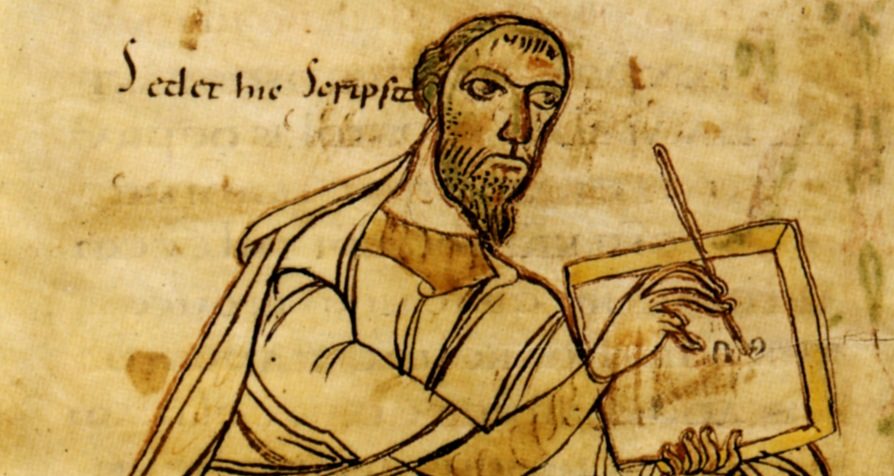
Note: This is the third installment of a new blog series announced here.
Sometimes, even in the academic world, things get said so many times that people assume they are true. And when that happens, no one bothers to look at the historical evidence in a fresh way. This has certainly been the case when it comes to this third misconception about the New Testament canon. It is routine these days to assert that the New Testament authors certainly did not think they were writing Scripture, nor had any awareness of their own authority. Mark Allan Powell, in his recent New Testament introduction, affirms this view plainly, “The … Continue reading...