
Should Christians Read Apocryphal Books?

As I indicated in a prior post, I am in the midst of a new 10-part video series on big questions related to the faith, and particularly the origins and reliability of the New Testament.
So, here’s the next installment in the series: “Should Christians Read Apocryphal Books?”… Continue reading...
How Do We Know We Have the Right Gospels?
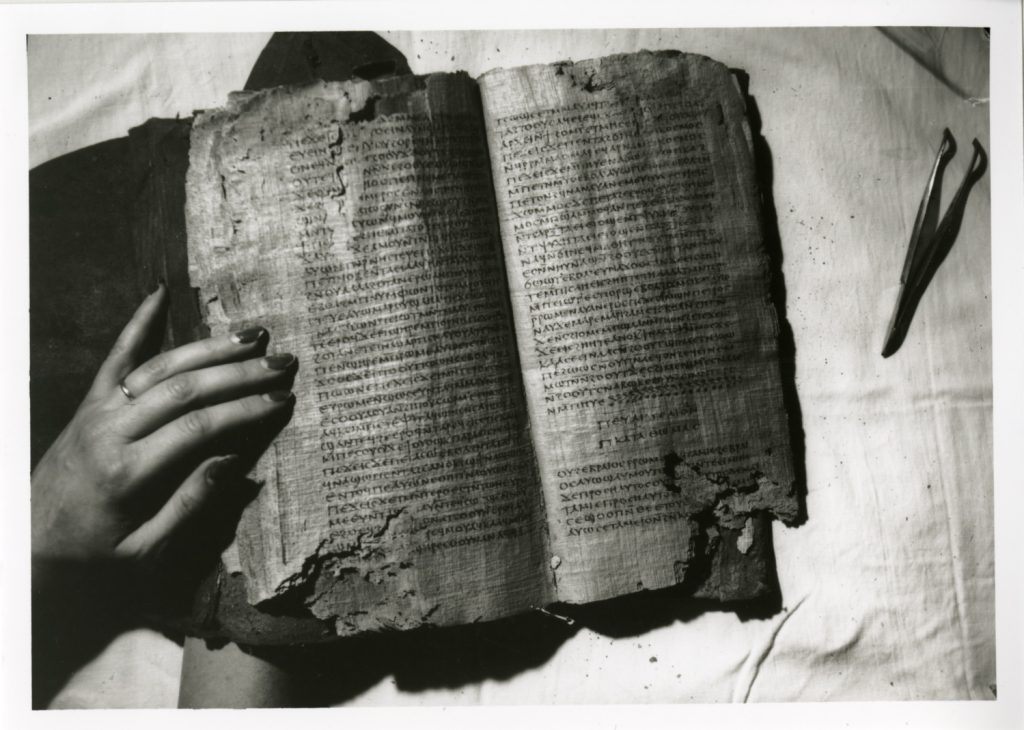
As I indicated in a prior post, I am starting a new 10-part video series on big questions related to the faith, and particularly the origins and reliability of the New Testament.
So, here’s the next installment in the series: “How Do We Know We Have the Right Gospels?”… Continue reading...
Is P.Oxy. 5575 the Only Manuscript that Mixes Synoptic Material with the Gospel of Thomas?

Back in September of 2023, I published an article on the newly discovered “gospel” manuscript from Oxyrhynchus: “New ‘Gospel’ Manuscript Discovered? (What it Is and Why it Matters).”
That manuscript, labelled P.Oxy. 5575, is a small papyrus manuscript dated to the second-century that exhibits a most notable feature, namely that it apparently contains a conglomeration of material from Matthew (6:25-26, 28-33) and Luke (12:22, 24, 27-31), and this Matt/Luke material is laid alongside portions from the Gospel of Thomas (27, 36, 63).
Indeed, it is this feature that has generated all the online buzz. Why? Because this is purportedly the only known manuscript that mixes Synoptic material with material from … Continue reading...
What Should We Make of the Hypothetical “Q” Source?

Students of the Gospels will know that there has been a long-standing discussion among scholars about the relationship between the Synoptic Gospels (Matthew, Mark, and Luke). These three Gospels are so similar at so many points (often word for word), that it raises a number of intriguing questions. Did they know each other? Did they use each other?
For generations, the dominant answer to this question has been the so-called “Two Source” hypothesis. In brief, that hypothesis argues that Mark wrote first, and then Matthew and Luke independently used Mark. Since Matthew and Luke did not know each other (so the argument goes), then the common material they share that … Continue reading...
All Gospels Are Not Created Equal: My Wall Street Journal Review of “The Apocryphal Gospels”

Most people have never read one of the “apocryphal” Gospels—that is, a gospel that was not included in our Bibles. For that matter, most people have never read one of the canonical Gospels: Matthew, Mark, Luke and John. Perhaps they’ve read snippets here and there, but very few have read them straight through.
Even so, there seems to be no shortage of opinions about the nature of ancient Gospels and how they functioned in the early church. Dramatic claims—typically filtered through blog articles and internet lore—are the order of the day. There were hundreds of “other” Gospels in the early church, we are told. No one knew which Gospels they … Continue reading...