
Is All High Christology Necessarily Orthodox?
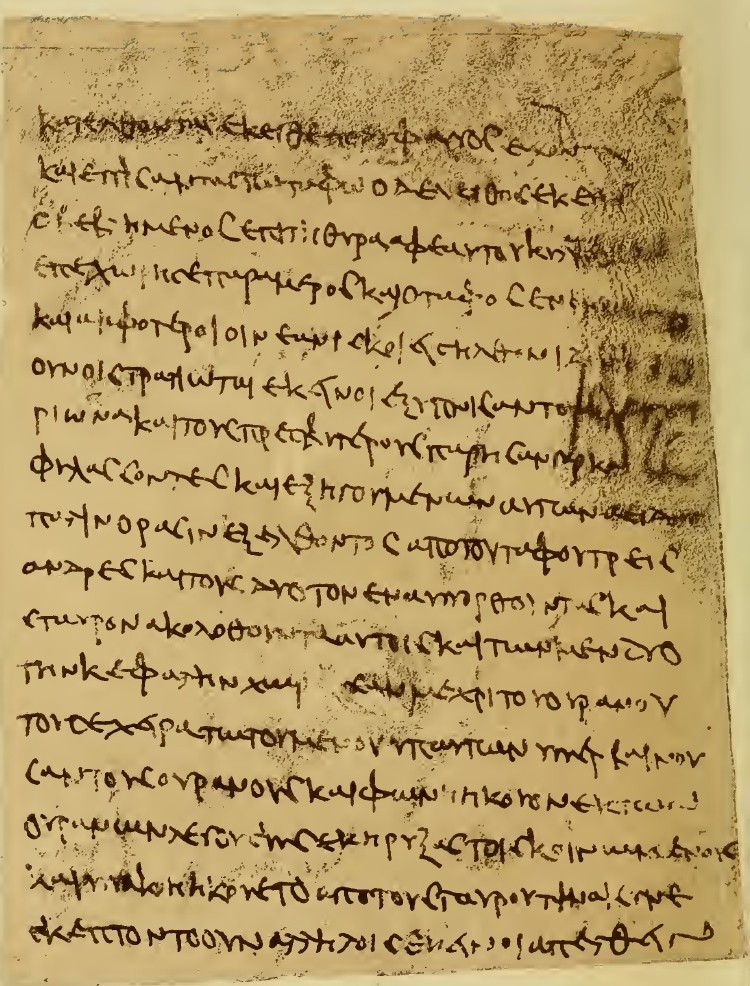
One of the classic, and seemingly never-ending, debates among New Testament scholars is whether Jesus’s earliest followers viewed him as fully divine, and (perhaps more importantly), whether Jesus viewed himself as fully divine. Some scholars say yes to both, some say no to both, and some are mixed.
In fact, I will be speaking on the subject of early Christology at The Gospel Coalition’s National Conference on April 23. My friend Scott Swain and I are tag-teaming the breakout session for Reformed Theological Seminary. He is speaking on the Names of God in the OT, and I am speaking on “Is Jesus the God of the Bible? High Christology … Continue reading...
Headed to San Diego for the Annual Meeting of the Evangelical Theological Society
 … Continue reading...
 Should Christians Read Apocryphal Books?

As I indicated in a prior post, I am in the midst of a new 10-part video series on big questions related to the faith, and particularly the origins and reliability of the New Testament.
So, here’s the next installment in the series: “Should Christians Read Apocryphal Books?”… Continue reading...
Ten Basic Facts about the NT Canon that Every Christian Should Memorize: #7: “Early Christians Often Used Non-Canonical Writings.”

Full blog series can be found here.
For Christians struggling to understand the development of the New Testament canon, one of the most confusing (and perhaps concerning) facts is that early Christian writers often cited from and used non-canonical writings. In other words, early Christians did not just use books from our current New Testament, but also read books like the Shepherd of Hermas, the Gospel of Peter, and the Epistle of Barnabas.
Usually Christians discover this fact as they read a book or article that is highly critical of the New Testament canon, and this fact is used as a reason to think that our … Continue reading...