
The Heresy of Orthodoxy: Who is Walter Bauer and Why Write a Book About Him?
In 1934, the German scholar Walter Bauer wrote a landmark work entitled Orthodoxy and Heresy in Earliest Christianity. The problem was that no one yet knew it was a landmark work. The Germans (and the world) had other things on their mind during this phase of European history.
But, in 1971 the book was translated into English. And with all the new found (largely American) fascination with apocryphal Gospels like the Gospel of Thomas, the English translation proved to be well timed.
Bauer’s core thesis was that early Christianity was profoundly diverse in terms of its theological commitments. Various Christian groups believed all sorts of contradictory things about … Continue reading...
Five “Fake News” Stories That People Believe about Early Christianity

There’s been a lot of chatter about “fake news” in recent months. Some stories, even though they have no basis in fact, are told so often, and with such conviction, that large numbers of people end up believing them anyway.
And some of these fake news stories even dupe legitimate political figures who repeat the story without realizing it is false. And, of course, once a mainstream political figure repeats a story then it becomes even more entrenched in the national psyche.
While some of these fake news stories are rather harmless, others have become quite dangerous. Most famous perhaps is the “Pizza Gate” incident in 2016 where … Continue reading...
Five Myths About the Ancient Heresy of Gnosticism

In the world of biblical studies, at least among some critical scholars, Gnosticism has been the darling for sometime now. Especially since the discovery of the so-called “Gnostic Gospels” at Nag Hammadi in 1945, scholars have sung the praises of this alternative version of Christianity.
Gnosticism was a heretical version of Christianity that burst on the scene primarily in the second century and gave the orthodox Christians a run for their money. And it seems that some scholars look back and wish that the Gnostics had prevailed.
After all, it is argued, traditional Christianity was narrow, dogmatic, intolerant, elitist, and mean-spirited, whereas Gnosticism was open-minded, all-welcoming, tolerant and loving. Given … Continue reading...
Destroyer of the Gods: New Book on Early Christianity by Larry Hurtado

This coming September, Larry Hurtado, Emeritus Professor of New Testament at the University of Edinburgh (and my Doktorvater), releases his latest volume, Destroyer of the Gods: Early Christian Distinctiveness in the Roman World (Baylor, 2016).
Larry allowed me to see a pre-published version of the book and I can tell you that it is (not surprisingly) an excellent piece of work and a fascinating look at the way early Christians fit (and didn’t fit) into their Greco-Roman context.
Although most modern Western individuals see Christianity as typical of all religions around the world (usually with the “all religions are the same” line added in for good measure), this volume … Continue reading...
Was Early Christianity Hostile to Women?
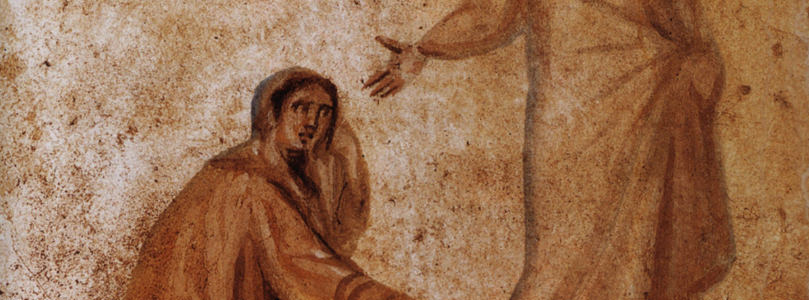
Since we live in a culture that is obsessed with gender identity and gender issues, it is not surprising to find Christianity on the receiving end of serious criticisms regarding its view of women.
Christianity–particularly if it embraces a complementarian theology–is viewed by many in our culture as oppressive and harmful to women. It does not provide, we are told, a friendly and welcoming environment where women can grow and thrive.
But, this is not just a problem for modern Christianity. The oppression of women, it is argued, was especially a problem in early Christianity. After all, in the first few centuries of the church, critics insist that the Christian … Continue reading...