
Were Early Christian Scribes Untrained Amateurs?
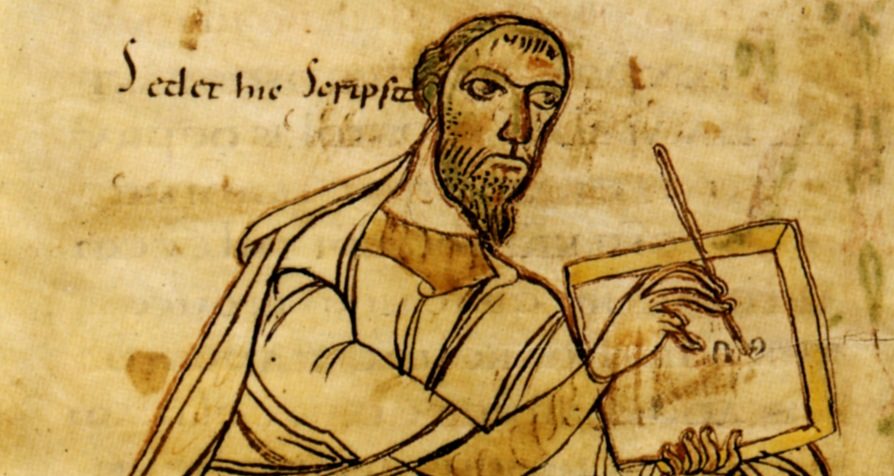
In the ongoing debates about the reliability of early Christian manuscripts, and whether they have been transmitted with fidelity, it is often claimed that early Christian scribes were amateurs, unprofessional, and some probably couldn’t even read.
In Michael Satlow’s recent book, How the Bible Became Holy (Yale, 2014), this same sort of argument appears. Satlow’s book argues that both the OT and NT canons were late bloomers, and that they bore no real authority until the third or fourth century CE. And part of the evidence for this claim comes from Satlow’s assessment of the NT manuscripts. He states:
… Continue reading...The copies of early Christian manuscripts from around the second century
Jeff Cate Reviews “The Early Text of the New Testament”

One of the classic debates among New Testament scholars pertains to the state of the New Testament text in the earliest centuries (2nd-4th). Was the text transmitted in a “wild” and “uncontrolled” fashion? Or did it exhibit a degree of stability and tenacity (as the Alands would put it)?
My friend Chuck Hill and I engaged this question in 2012 when we edited the volume The Early Text of the New Testament for Oxford University Press. In this volume, we collected together over 20 of the finest textual scholars today to address these important questions. The volume did not answer every issue, nor did all its contributors even agree with … Continue reading...
Is the Original Text of the New Testament Lost? Rethinking Our Access to the Autographs

One of the standard challenges for New Testament textual criticism is whether we can work our way back to the original text. Some scholars are notoriously skeptical in this regard. Since we only have later copies, it is argued, we cannot be sure that the text was not substantially changed in the time period that pre-dates those copies.
Helmut Koester and Bart Ehrman are examples of this skeptical approach. Koester has argued that the text of the New Testament in the earliest stages was notoriously unstable. Most major changes, he argues, would have taken place in the first couple centuries.
Ehrman makes a similar case. Since we don’t have the … Continue reading...
Do We Have the Original Text? Some Optimism in Textual Criticism

Over the last few decades, the world of textual criticism has had a less than an optimistic feel about it. While the central purpose of textual criticism has traditionally been the recovery of the “original” text (regardless of whether one is dealing with the New Testament or any ancient text), some are now suggesting that it should not necessarily be the goal of the discipline.
Bart Ehrman, commenting on the attempts to recover the original text, declares, “It is by no means self-evident that this ought to be the goal of the discipline…there may indeed be scant reason to privilege the ‘original’ text over forms of the text that developed … Continue reading...
Two Recent Reviews of “The Early Text of the New Testament”

I was pleased to see two recent positive reviews of my co-edited volume (with Chuck Hill), The Early Text of the New Testament (Oxford, 2012). As a side note, the book is now out in paperback for only $45 (which I mentioned in a prior post here).
Over at the Review of Biblical Literature, Amy Donaldson concludes her review:
… Continue reading...For anyone interested in the early text of the New Testament, the state of research, and further avenues of study in this topic, this book is a valuable introduction and reference tool. For those interested in specific books of the New Testament or patristic authors, the individual chapters on