
Is Deconstruction the Same as Deconversion? A Few Reflections on Reforming the Church

The last few years have been a rough stretch for the evangelical church. Plagued not only by a complex and intractable health crisis with COVID, the church has also faced an increasingly polarized cultural-political environment as well as numerous internal scandals involving abusive leadership.
Perhaps it is not surprising that this same period of time has seen a rise in so-called cases of deconversion—people who once claimed to be fairly run-of-the-mill evangelicals but then, for whatever reasons, decided this was not the life for them. And they walked away from the faith.
The high-profile cases of deconversion stories are well known: Rob Bell, Rhett and Link, Joshua Harris, etc. … Continue reading...
How Difficult was the Book of Revelation’s Journey into the Canon?

The story of the New Testament canon is a fascinating one, with many twists and turns. There are books that were accepted very quickly, almost from the start (e.g., the four gospels), and there are other books that struggled to find a home (e.g., 2 Peter).
And then there is the book of Revelation.
Few today would contest the claim that the book of Revelation stands as one of the most controversial, complicated, and esoteric books in the New Testament canon. Perhaps it should come as no surprise, then, that its reception by the early church was equally complicated and controversial.
But, the story of the book of Revelation is … Continue reading...
What is a “Gospel” Anyway? A Few Thoughts on Gospel Genre and Why it Matters

When it comes to reading (and interpreting ) the Gospels, one of the fundamental questions pertains to the kind of document we are reading. What exactly is a “Gospel”? And did the earliest readers of these books know what they were reading?
Such questions may seem pedantic to the average reader, but they matter more than we think. Right interpretation is built on (among other things) correctly assessing the literary genre. We don’t read parables like historical narrative, nor do we read poetry (Psalms) like apocalyptic literature.
An example of confusion over “genre” in our modern world (though in a different medium) pertains to the growing practice of making internet … Continue reading...
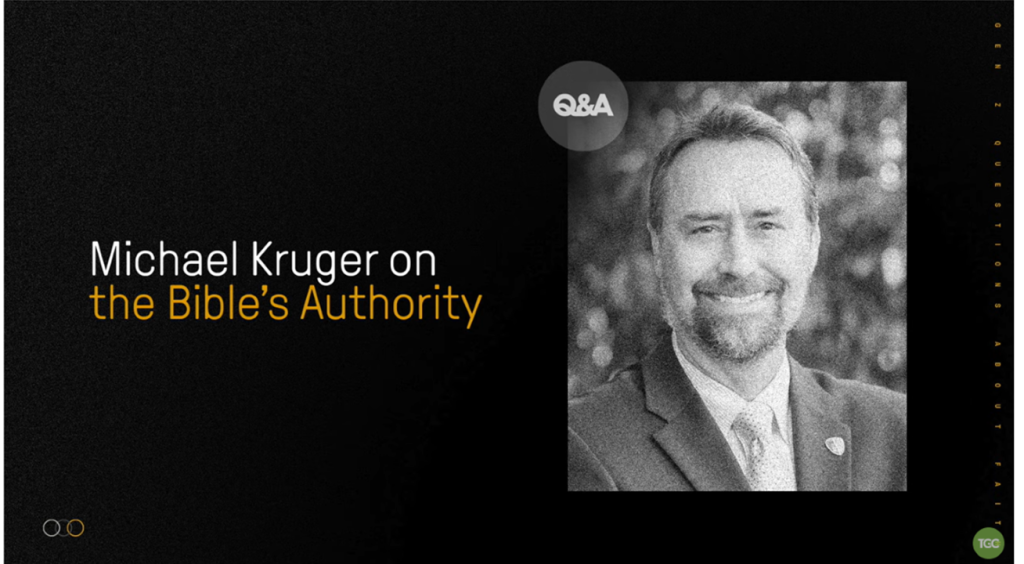
The Bible’s Authority – Gen Z’s Questions About Christianity (The Gospel Coalition)
 … Continue reading...
 What Exactly Is “Sola Scriptura” Protecting Us Against?

One of the foundational convictions of the Reformers was, of course, this doctrine we call Sola Scriptura (Scripture alone). Simply put, this is the belief that the Scriptures are the highest and most ultimate authority in the life of the Christian.
Contrary to popular misunderstandings, it is not the belief that the Scriptures are the only authority. Christians have other legitimate authorities in their life (their elders, classical creeds, etc.), but only Scripture is an infallible authority. For more on this point, see here.
At the heart of Sola Scriptura, is the recognition that fallen humans are always looking to replace God’s authority with some other human/creaturely authority. … Continue reading...