
What’s the Best Argument for the Resurrection?

Well, soon it will be Easter. That wonderful time of the year when we remember (and celebrate) the resurrection of Jesus from the dead.
But, not all will be celebrating. There are many that find Easter to be a senseless holiday—apart from, perhaps, the joys of Sunday brunch or chocolate eggs. After all, it is argued, we all know that people don’t rise from the dead. And there are no reasons to think it happened in the case of Jesus of Nazareth.
In response to such skepticism, apologists have been making their best arguments for the resurrection. There’s the empty tomb. There’s the fact that women were the first eyewitnesses … Continue reading...
Does the World Notice When Christians Fight with One Another?

In the earliest centuries of the church, the burgeoning Christian movement had its fair share of critics. And their complaints were wide and varied. Christians worshipped a criminal crucified by the Romans. Christians were a threat to the empire because of their refusal to pay homage to the gods. Christian books were filled with errors and contradictions. Jesus was a magician who learned his dark arts in Egypt. And so on.
Of all the early critics (and there were many), Celsus was undoubtedly the most strident. Writing in the latter half of the second century, Celsus was a Greek Philosopher who penned one of the earliest sustained critiques of Christianity … Continue reading...
The Brilliant Apologetic Strategy of the Ancient Church

One of the benefits of studying the history of early Christianity is that we quickly realize that what we are facing in the modern day is far from new. Each challenge to the faith might seem new—sometimes leading to an unnecessary panic among some—but the early church faced similar (and often much worse) things before.
The second century was just such a time. Christianity was in its infancy, a bit like a newborn animal on the Serengeti plains, wobbly legs and all. And the world around them was by no means friendly. Attacks came hard and fast from all directions.
But Christians responded. They sharpened their arguments, they clarified their … Continue reading...
What’s the Earliest New Testament Evidence for the Divinity of Jesus?
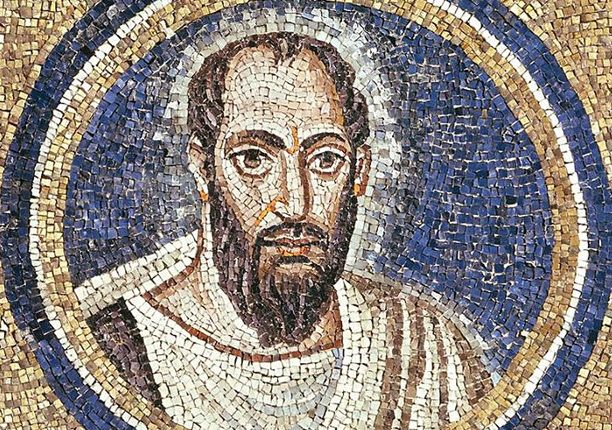 … Continue reading...
 Is the Resurrection of Jesus Likely or Unlikely?
… Continue reading...